For chord-based piano players who can get through a song, but never quite understood what made those chords work
Go From Playing Chords You Don't Quite Understand, to Hearing How Pop, Rock, and Folk Songs Are Actually Written, in Seven Short Lessons
Seven short video lessons on the small handful of music theory ideas that actually matter for chord-based piano. No sheet music. No classical baggage. Even if you've tried theory before and bounced off it.
Trusted by thousands of adult learners since 2020.
One-time payment · Lifetime access · 30-Day Money-Back Guarantee
30+ Years Experience Playing Piano

3000+ Piano Chord Breakthroughs Alumni

161.2K
161,000 Youtube Subscribers
Thousands of Online Students Mastering Piano
Stuck in C, lost in YouTube land, and tired of guessing? You're not alone.

You sit down to play and the chords sort of work, but you couldn't explain why. The next song you try feels like guesswork all over again. You hunt for the right tutorial and close the laptop more confused than when you opened it. You can get through a song someone shows you. But the moment they're gone, so is the song.
You've probably tried:
✓ Watching dozens of YouTube tutorials. They show you what to play, but never quite why it works, so you can copy the song without ever really understanding it.
✓ Looking into local piano lessons. But most teachers default to sheet music and classical pieces, which is exactly the approach you came to chord playing to escape.
After a while, you start wondering if the problem is you. That you're not naturally musical. That you started too late. That your memory's not what it used to be. None of that is true. But it's a hard thought to shake on your own.
Here's the thing: The reason none of those approaches helped isn't who you are. It's how piano theory keeps getting taught to people who came to chords to escape it.
Playing becomes less about guessing and more about hearing what's coming next.
There's a version of this where you sit down to play and stop feeling like you're guessing. The chord change that used to throw you actually lands where you expected. The song you've heard a thousand times suddenly makes sense, because you can hear the same handful of chord changes you've been hearing across every song you love.

Stop guessing. Start knowing what's coming next.
Chord changes stop feeling random the moment you can see the pattern. You sit down to a song and recognize the progression you've seen before, so the next chord makes sense before you play it.

Learn new songs faster, because you see the pattern.
Most popular music is built from the same small handful of chord progressions. Once you can spot them, a new song stops being seven new things to memorize and starts being a small variation on something you already know.

Move any song to fit your voice.
Songs you've loved your whole life that sit too high or too low to sing along to? You can move them into a key that actually works for you, and play them on your own terms.

Hear the patterns across the songs you love.
You'll start to hear why the same chord can carry one feeling in one song and a completely different feeling in another. Music stops feeling random and starts feeling like a language with its own grammar.

Theory that lands on the music you play.
Not the dry, academic, notation-heavy theory you came to chord playing to escape. Just the small core that makes chord-based playing make sense, taught the same plain way I teach everything else.

A foundation to start writing your own.
Once you understand how chords are built from a key and how progressions move between them, sketching out a progression of your own, or bending one in a song you love to make it more interesting, stops feeling like something only "real musicians" do.
None of this is talent or natural musicality. There's a specific reason chord-based playing starts to make sense for people who've been guessing for years, and it has nothing to do with more practice.
Get instant access for just $97.
One-time payment · Lifetime access · 30-Day Money-Back Guarantee
Why most piano theory falls apart for chord-based players, and what actually works.

Most piano theory is built for classical students. It's notation-heavy, jargon-heavy, and academic, which is exactly what people who came to chord playing wanted to escape. YouTube goes the other way, showing what to play but rarely why, in scattered pieces that never quite add up. Neither one connects theory to the songs you actually want to play, so the small ideas that would make everything easier stay buried under the parts that don't.
The thing I've spent years figuring out is which parts of theory actually matter for someone playing from chords. Most of it really is dry, academic, and beside the point. So I cut all of that away. What's left is a handful of ideas about keys, scales, chord progressions, and the techniques pros use to bend them. Taught the same plain way I teach everything else. No jargon. No sheet music. Just clear explanations that build one step at a time.
I see this play out in my students all the time. People who were sure theory wasn't for them finish the course saying things they thought they knew, they now actually understand.
That's the course I built around it. A focused, no-filler walk through the music theory that actually moves chord-based playing forward.
Keys to Chord Progressions
A focused course on the theory that actually moves chord-based playing forward.
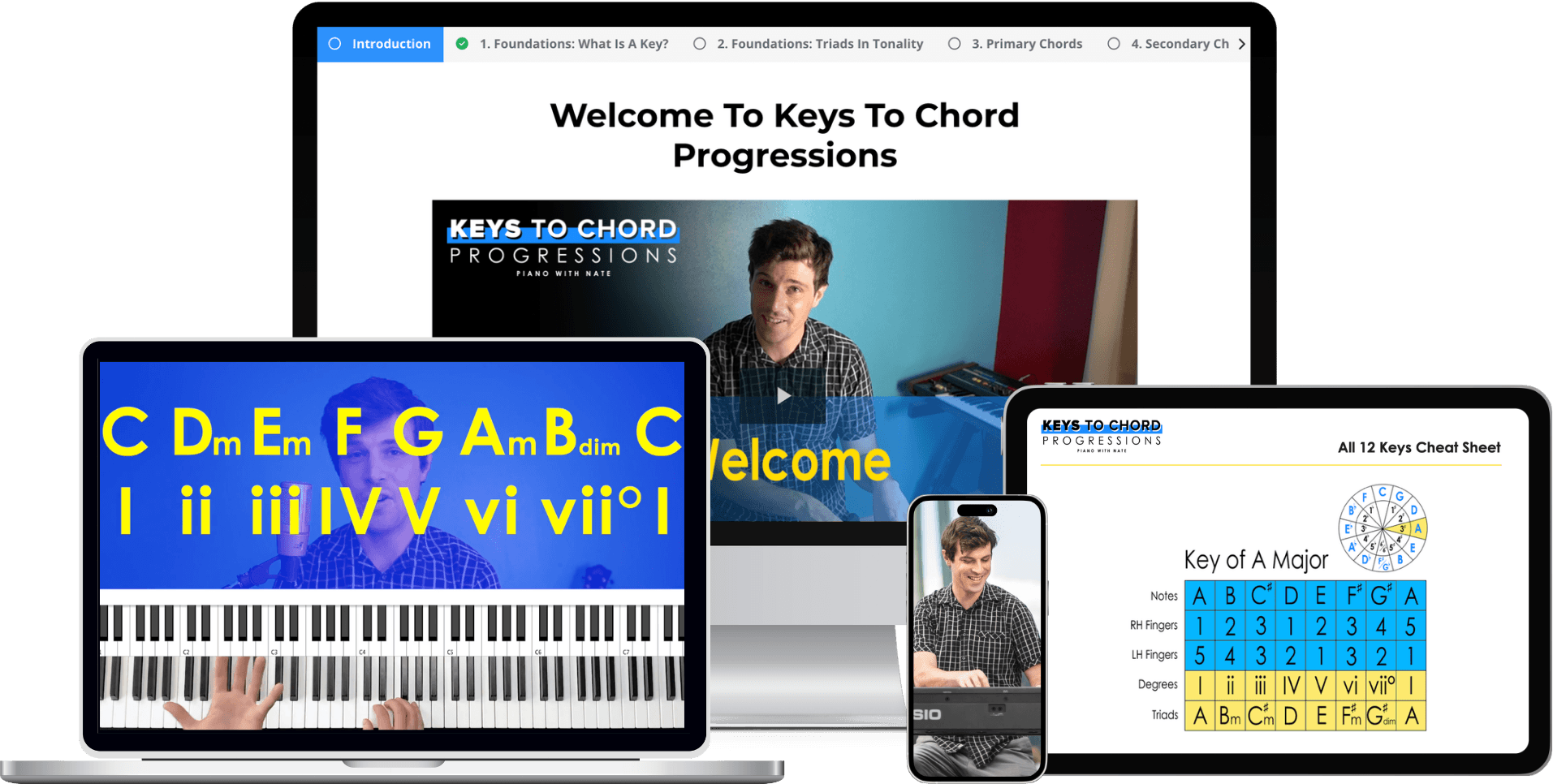
I built Keys to Chord Progressions for chord-based players who can follow a chord chart but can't say why those chords work together. Seven short video lessons and a printable workbook covering the small handful of theory ideas that make chord-based playing start to click.
This isn't built like a beginner app or a YouTube tutorial. It's seven short lessons, with step-by-step exercises in each, and a printable workbook with the diagrams and practice you'll want next to you at the piano. Short enough to finish. Concrete enough to use immediately. No sheet music. No classical baggage. Just the small core that makes chord changes feel like patterns you understand instead of moves you memorize.
Get instant access for just $97.
One-time payment · Lifetime access · 30-Day Money-Back Guarantee
Here's What's Inside Keys to Chord Progressions
Seven short video lessons with step-by-step exercises, plus a printable PDF workbook you can keep next to the piano.

Module 1
What Is A Key?
This is the foundation. We explore how scales relate to the idea of a "key," and how a key gives notes their emotional qualities. You'll also learn the one simple pattern that produces every major scale on the piano. Once you can build one, you can build them all. This is the small piece of theory that does the heaviest lifting in the rest of the course.

Module 2
Triads In Tonality
Almost all music can be boiled down to the basic building blocks of chords: specifically, triads. Here we learn the universal way chords fit into a key, taught with simple triads in root position. It's the piece that makes "which chords work together" stop feeling like a mystery.

Module 3
Primary "Destination" Chords (Chord Progression Construction)
Knowing which chords sound good together isn't enough. You also need to know how to use them to tell a story. In this lesson, we focus on the three major chords (I, IV, and V) that make up most of pop music, and why each one feels so different inside a key, even though they're all built the same way. Most students find this part fascinating.
Module 4
Secondary "Path" Chords (Chord Progression Construction)
Once you have the destination chords, secondary chords are the scenic routes between them. They add depth and color to a progression. I'll walk you through tried-and-true rules of thumb for knowing which chord to change to next, so progressions start to feel like sentences instead of guesses.

Module 5
Exploring New Keys
With the major scale formula in your pocket, you'll learn how to apply it to new keys. This course isn't about running two-handed scale exercises in all twelve keys. We focus on the universal pattern and start by truly mastering just three keys, enough to learn songs quicker, and to set up the next lesson on transposing.

Module 6
Transposing
Once you understand a few scales and keys, changing a song from one key to another stops being mysterious. You can play any song in the register that fits your voice. I walk you through a reliable transposing process you can use whenever a song calls for it.

Module 7
Breaking Out of a Key
Rules are meant to be broken, but not at random. In this lesson, we explore chords that don't belong to the key of a song, and the reliable techniques pros use to deviate from a key in a way that creates surprise and emotional impact instead of dissonance. This is where you start to hear the difference between the songs that follow the rules and the ones that play with them.
By the end of all seven lessons, you won't just know more chords or scales. You'll understand how chord-based music actually works under the surface. That's the difference between someone who can play a few songs and someone who can sit down at the piano and hear what's happening.
All seven modules for just $97.
One-time payment · Lifetime access · 30-Day Money-Back Guarantee
Here's What Students Are Saying About Keys to Chord Progressions

"Finally understanding keys has been amazing. My husband has been a musician for 40 years and I am finally able to play along with him! Your explanation of the circle of fifths is very understandable and actually inspiring where as prior to this course to me was a foreign language. Thank you so much for your inspirational teaching method."
— Lisa N

"Keys to Chord Progressions very helpful. I started playing piano about a year and a half ago. I am in my late 40's, but I had no interest as a child to learn music. This course explains why certain songs can hook you in simple ways. The chord progression exercises are more helpful than playing scales repeatedly!"
— Joe M

"I wanted to understand the music science behind your arrangements and not just memorize them. I found your explanations so clear, logical, and easy to follow, that things I thought I knew, I now understand."
— Bjorn K

"I found the Keys to Chord Progressions course really valuable. Even though I already can read music, I didn't really understand keys and how to build a song. I'm excited to use this new information to help me better play along when I play with friends. Understanding keys and chord progressions will help me learn new songs much more quickly. I learned something new in each lesson and I recommend this course. Thanks Nate!"
— Sheilagh S
Get instant access for just $97.
One-time payment · Lifetime access · 30-Day Money-Back Guarantee

30-Day Money-Back Guarantee
Try it. If it doesn't land for you, you get every penny back.
Two Paths Forward
If nothing changes
✓ You're still guessing at every chord change, hoping the next one works.
Another YouTube rabbit hole, closing the laptop more confused than when you opened it.
Stuck on the same plateau the apps left you on, never quite sure what to practice next.
Still convinced theory isn't for you, even when something in you suspects it might be.
✓ Songs you love sitting in keys that don't fit your voice, going unplayed.
That quiet thought, every so often, that maybe you're just not naturally musical.
Curious about writing your own progressions, but no clear sense of what chord options you actually have.
With Keys to Chord Progressions
Chord changes that actually make sense, with a real shot at predicting what comes next.
You sit down with a song you love and have a real chance at working it out on your own.
A clear, finite path you can actually finish, with each lesson moving the next one forward.
The small slice of theory that genuinely makes chord-based playing easier, taught without the academic baggage.
Any song you love, moved into a key that fits your voice, on your own terms.
Playing the piano starts to feel like understanding what you're doing instead of hoping it works.
A clear menu of options at every chord change, whether you're writing a progression from scratch or reworking one you love.
What if I've started other piano courses and never finished?
...and other questions you might have.
I'm busy. How much time does this actually take?
Is this for complete beginners?
How is this different from free YouTube theory videos?
How quickly will I see this in my playing?
How long do I get access, and how is it delivered?
What if it doesn't work for me?
I tried music theory before and it didn't stick. Will this be different?
Do I need to read sheet music for this?
Get instant access for just $97.
One-time payment · Lifetime access · 30-Day Money-Back Guarantee
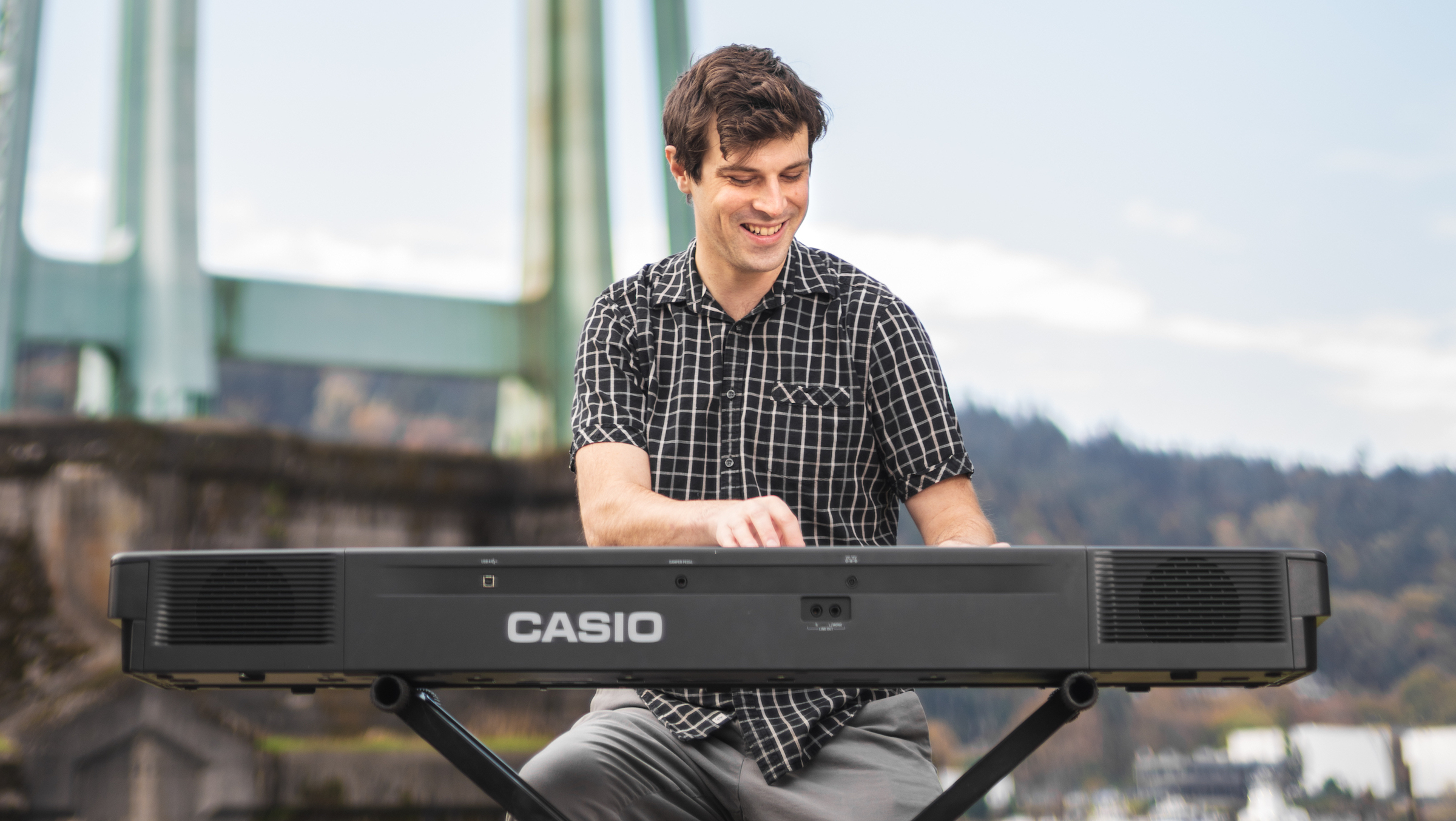
Hi, I'm Nate
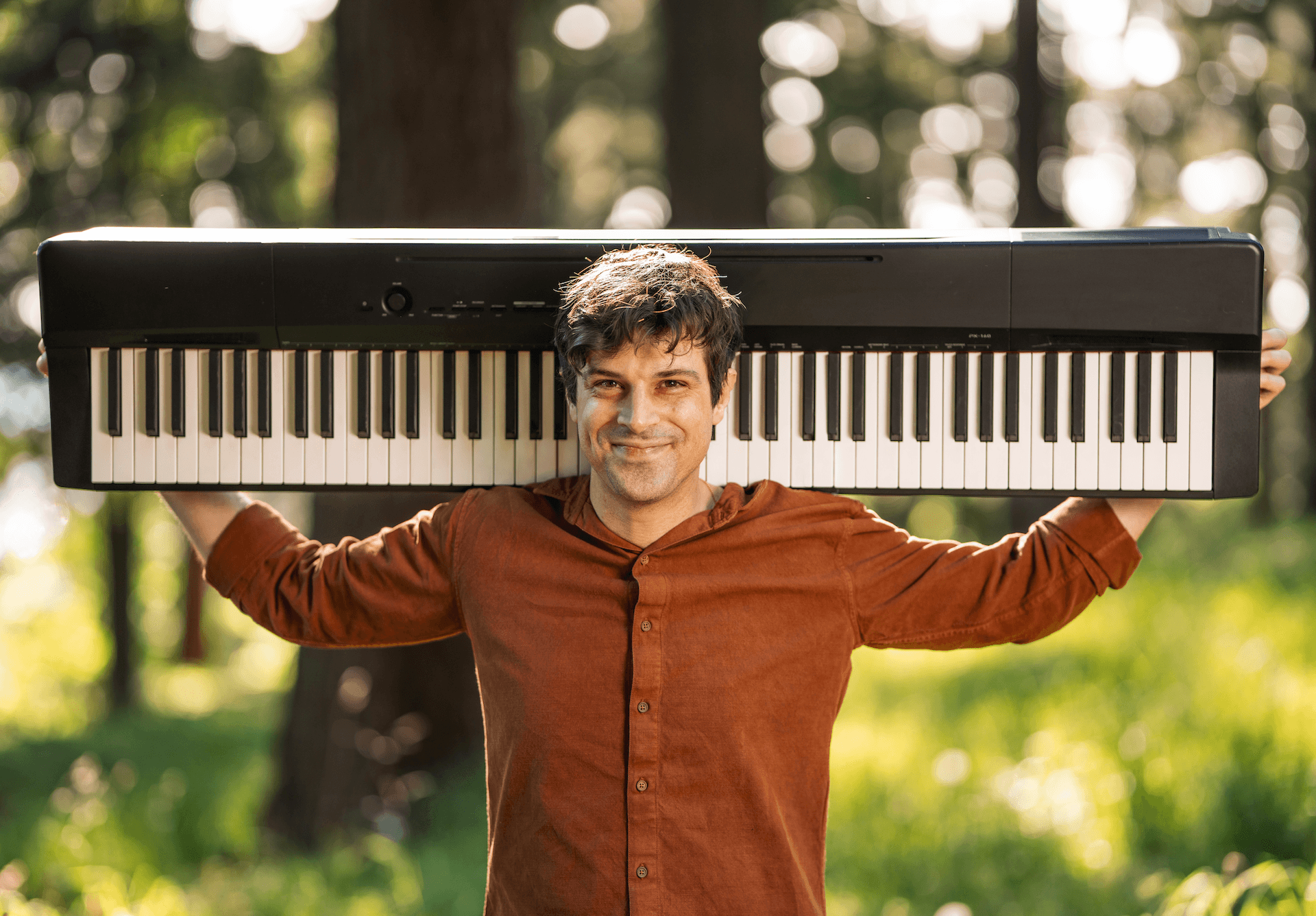
I've been teaching piano for sixteen years now. The first ten in private lessons, and the last six on YouTube and inside my courses, mostly with adult students learning chord-based piano outside the classical track. Most of the people I work with can play a few songs but can't say why those chords work. They've usually been told some version of "you don't need theory." I half agree. Most of it really is dry, academic, and beside the point.
Keys to Chord Progressions is the part I do think every chord-based player should be shown. Seven short lessons on the music theory that actually moves your playing forward, taught the same plain way I teach everything else. I'd love to walk you through it.
Everything You're Getting Inside Keys to Chord Progressions
Keys to Chord Progressions includes:
✓ Module 1: What Is A Key? Understand how keys work and the simple pattern behind every major scale.
✓ Module 2: Triads In Tonality. See how chords fit into a key and which ones work together.
✓ Module 3: Primary "Destination" Chords. Learn the three chords in any key that anchor most pop music.
✓ Module 4: Secondary "Path" Chords. Add depth and color with the scenic-route chords inside a key.
✓ Module 5: Exploring New Keys. Apply the major scale formula to play and learn in any key.
✓ Module 6: Transposing. Move any song into the register that fits your voice.
✓ Module 7: Breaking Out of a Key. Use chords outside the key to create surprise and emotion.
✓ Printable PDF Workbook. Diagrams and exercises to keep next to the piano.
All backed by my 30-Day Money-Back Guarantee.
Get everything for just $97.
(One-time payment, lifetime access)
One-time payment · Lifetime access · 30-Day Money-Back Guarantee
You're one click away from music theory that actually makes sense at the piano.
"Finally understanding keys has been amazing. My husband has been a musician for 40 years and I am finally able to play along with him! Your explanation of the circle of fifths is very understandable and actually inspiring where as prior to this course to me was a foreign language. Thank you so much for your inspirational teaching method."
— Lisa N
"Keys to Chord Progressions very helpful. I started playing piano about a year and a half ago. I am in my late 40's, but I had no interest as a child to learn music. This course explains why certain songs can hook you in simple ways. The chord progression exercises are more helpful than playing scales repeatedly!"
— Joe M
"I wanted to understand the music science behind your arrangements and not just memorize them. I found your explanations so clear, logical, and easy to follow, that things I thought I knew, I now understand."
— Bjorn K